


Padel and platform tennis get lumped together constantly, and it’s not hard to see why. Both are played in an enclosed space where the walls, or in platform tennis, the screens, are a part of the game. Both use a solid, stringless paddle (instead of a strung racquet). Both reward angles, finesse, and patience over raw strength and power. But, when you pick up the gear for each sport you’ll notice fast: they are not the same paddles, and this isn’t close to being the same sport either.
Let’s have a quick history lesson before we get into the nitty gritty gear talk: Michael Dorfman, the CEO of the Pro Padel League, told CNBC Sport that the U.S. pronunciation of “padel,” pa-DEL, emphasis on the second syllable, isn’t actually its original one. It was done like that on purpose, specifically so people wouldn’t confuse the sport with platform tennis, which is already known as “paddle” in different parts of the Northeast and Chicago. His words: it’s basically a little shade against platform tennis. That sounds fitting, since that’s the exact mix-up we’re attempting to clear up with this post.
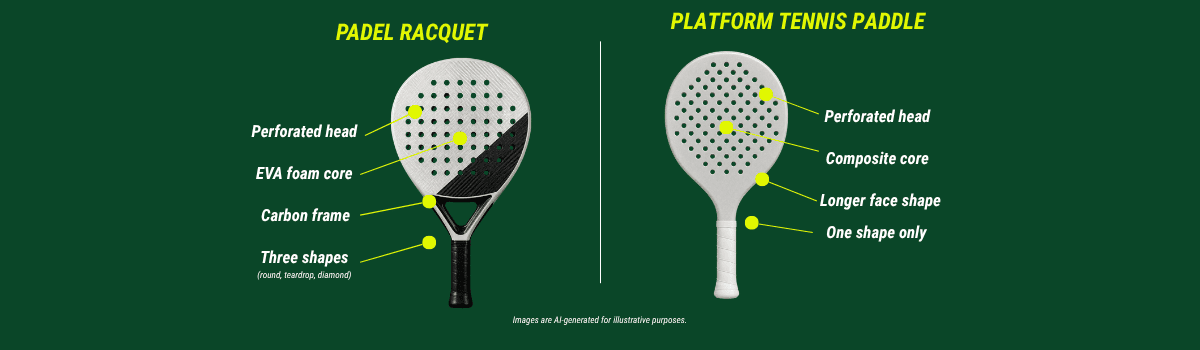
Same idea, noticeably different build
Let’s start with the face. Neither paddle uses strings (which throws off plenty of tennis players the first time they pick one up). But the padel racquet is built for spin and pop: an EVA foam core wrapped in carbon fiber or fiberglass, engineered into one of three shapes (round, teardrop, or diamond) depending on whether you want control, balance, or power. It’s the kind of gear you shop for in the same way you’d shop for a pickleball paddle, matched to your playing style down to the shape.
The platform tennis paddle however plays it straighter. It’s longer, narrower, made from composite materials, and doesn’t come in the same spread of shapes. Fewer options, less to overthink. Just one paddle that has one job.
Here’s the part nobody mentions: the ball
The ball is where the two sports really split apart. Padel’s ball is basically a tennis ball with less pressure, with just enough to soften the bounce and slow the pace. Platform tennis skips the tennis ball altogether. It’s a purpose-built sponge-rubber ball made specifically for the sport, and it behaves nothing like a depressurized tennis ball once it’s in the air.
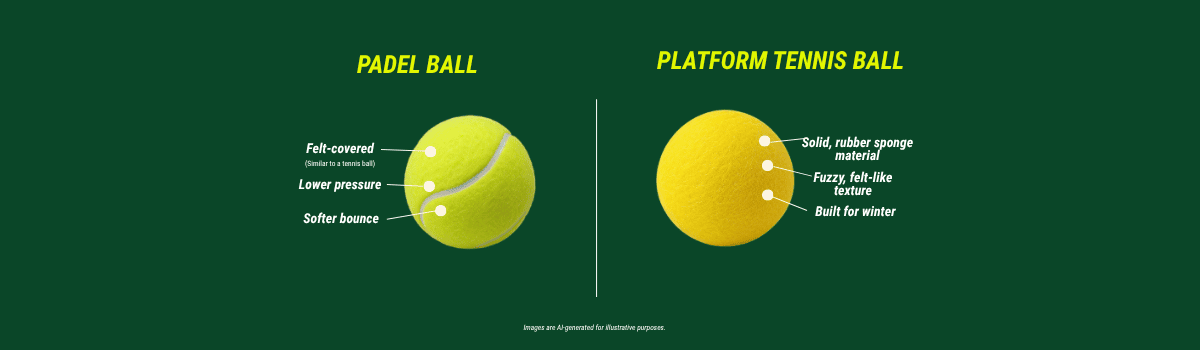
And the court makes the differences even clearer
Padel courts are enclosed with tempered glass and mesh fencing, built to be played at ground level, all year-round. Platform tennis is a different animal entirely: it’s played on a raised, heated platform surrounded by wire screens, built specifically so people in the Northeast could keep playing through the winter.
That’s a real literal, structural difference, not just a kooky naming quirk. Padel is a global sport exploding in popularity right now. Platform tennis is a cold-weather tradition that’s stayed mostly regional and on a IYKYK basis.
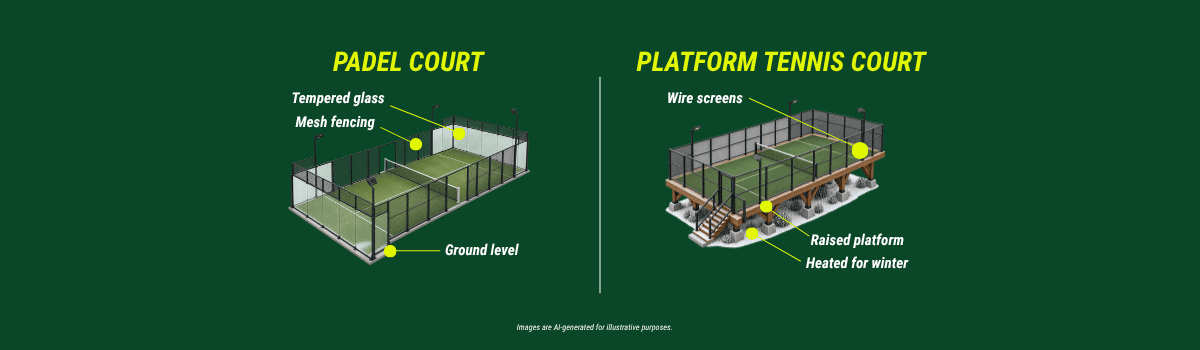
Why this actually matters
If you’ve been hearing about padel’s boom but keep landing on platform tennis courts, clubs, or gear instead, it’s worth sorting out before you buy anything or book a session. Bring a platform tennis paddle to a padel court, or vice versa, and you’ll spend your first ten minutes fighting your equipment instead of learning how to play the game.
Once you know what to look for, the tell is pretty fast. Foam core, three shape options, glass-walled court? Boom: that’s padel. Composite core, one standard shape, heated deck with screens? You got it, that’s platform tennis.
Ready to feel the difference yourself? Find padel courts near you on CourtsApp.
